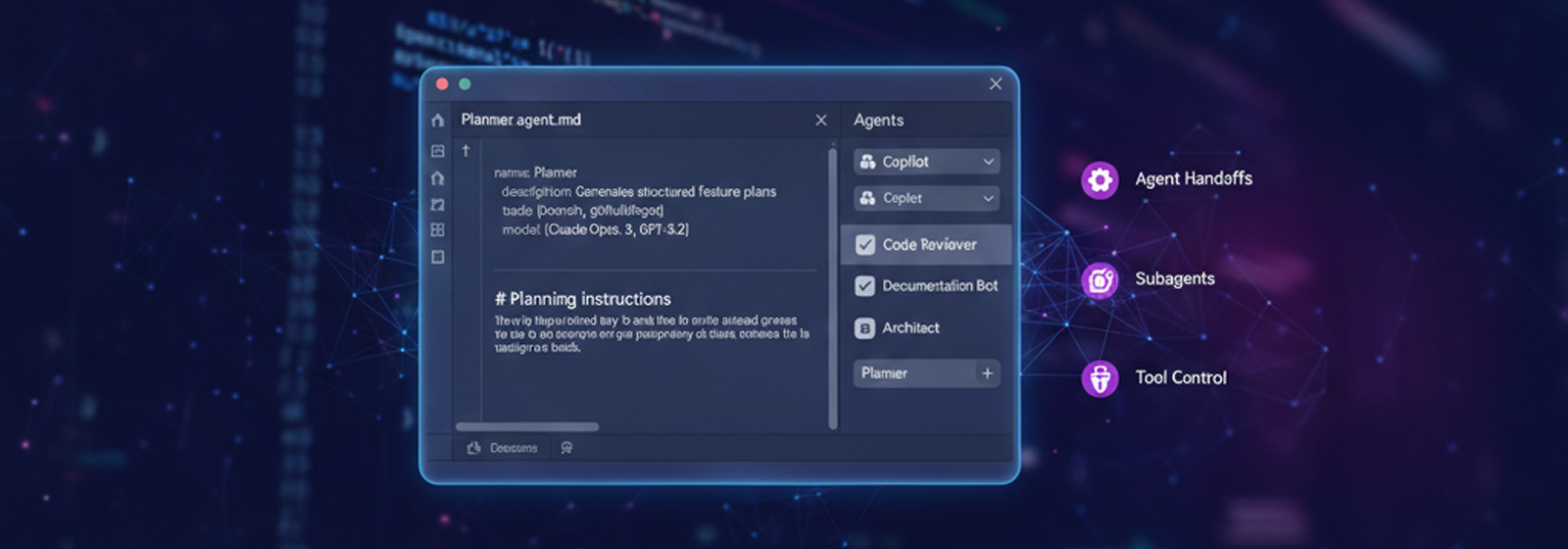
What Is Microsoft Foundry?
A complete guide to Microsoft Foundry - Microsoft's unified enterprise AI platform for building, governing, and operating AI at scale.
Feb 16, 2026
A Complete Guide to Microsoft’s Enterprise AI Platform
Artificial intelligence has rapidly shifted from niche research projects into mission-critical enterprise systems. Yet building, governing, and scaling AI applications can still be complex, especially when teams must manage models, workflows, infrastructure, access control, and data security across multiple services.
Enter Microsoft Foundry, Microsoft’s unified AI platform that brings all of these components together into one interoperable ecosystem.
In this article, we’ll explore:
- What Microsoft Foundry is today
- Why it matters for enterprises
- The previous names it operated under
- Its key capabilities and business impact
What Is Microsoft Foundry?
Microsoft Foundry is a unified AI platform that enables organizations to:
- Build
- Deploy
- Optimize
- Govern
- Operate
AI applications and intelligent agents all from a single, integrated environment.
It is designed to simplify the full AI lifecycle, from experimentation to production-scale deployment.
Core Capabilities
Microsoft Foundry helps teams:
-
Build and manage AI models from multiple providers, including
- OpenAI
- Anthropic
-
Create AI agents that automate workflows and deliver context-aware experiences
-
Implement enterprise-grade governance with centralized monitoring and role-based access control (RBAC)
-
Ground AI outputs in enterprise data using tools such as Azure AI Search and Microsoft Fabric
Rather than navigating multiple dashboards and disconnected services, Foundry centralizes development, orchestration, and governance allowing teams to focus on delivering measurable business value.
A Brief History
Previous Names and Evolution
One of the most common questions about Microsoft Foundry is:
“Wasn’t this called something else before?”
Yes, and several times.
Here’s the simplified evolution timeline:
1. Azure OpenAI Studio
In its early stage, Microsoft provided a development portal focused primarily on OpenAI models hosted in Azure.
This was commonly referred to as Azure OpenAI Studio.
At this stage, the platform was primarily used for:
- Prompt experimentation
- Model testing
- Early generative AI prototypes
It was more of a sandbox environment than a full enterprise AI platform.
2. Azure AI Studio
As Microsoft expanded the scope beyond OpenAI models, the portal evolved into Azure AI Studio.
This shift reflected:
- Support for additional AI services
- Model evaluation tools
- Broader AI workflow capabilities
- Expanded integrations
The focus was no longer limited to generative AI experimentation it was becoming a more comprehensive AI development environment.
3. Azure AI Foundry
In 2024, Microsoft rebranded the platform as Azure AI Foundry.
This marked a significant shift:
- From a “studio” for experimentation
- To a “foundry” for building, managing, and governing AI systems at enterprise scale
Key additions during this phase included:
- Unified SDKs
- Agent frameworks
- Governance tooling
- Model catalogs
- Lifecycle management
The name “Foundry” symbolized a production-ready AI factory rather than a testing workspace.
4. Microsoft Foundry
In late 2025, Microsoft streamlined the branding to simply the experience as Microsoft Foundry.
Microsoft Foundry
This change signaled:
- A broader enterprise identity
- Platform-level positioning beyond just Azure branding
- Microsoft’s long-term commitment to unified AI infrastructure
Today, Microsoft Foundry is the official and current name.
However, you may still encounter:
- Azure AI Foundry
- Azure AI Studio
in older documentation, training materials, or screenshots.
Key Capabilities
Microsoft Foundry is more than a portal. It is a full AI ecosystem.
Unified Model Catalog
Developers can explore, compare, and deploy models from multiple providers including GPT models and Anthropic’s Claude models all within one environment.
This enables:
- Performance benchmarking
- Cost optimization
- Flexible model routing
Multi-Agent Systems
Rather than deploying isolated chatbots, Foundry enables:
- Multi-agent orchestration
- Task delegation
- Automated enterprise workflows
This allows AI systems to perform structured, multi-step operations across business tools.
Enterprise Governance
Built-in governance includes:
- Role-based access control (RBAC)
- Compliance monitoring
- Policy enforcement
- Centralized observability
These capabilities are essential for regulated industries and large enterprises deploying AI at scale.
Data Grounding and Knowledge Integration
Foundry integrates with enterprise data systems such as:
- SharePoint
- Microsoft Fabric
- Azure AI Search
This ensures AI outputs are grounded in real organizational data rather than generic responses.
Deployment and Integration
Teams can deploy AI agents into:
- Microsoft Teams
- Microsoft 365
- Custom enterprise applications
This reduces friction between development and real-world usage.
Why Microsoft Foundry Matters
Microsoft Foundry represents a shift from AI experimentation to enterprise AI operations.
From Prototype to Production
Organizations can move from proof-of-concept to scalable deployment much faster.
Unified Tooling
Instead of stitching together:
- Model APIs
- Orchestration frameworks
- Security systems
- Monitoring tools
Foundry consolidates them into one platform.
Model Flexibility
Support for multiple providers ensures businesses are not locked into a single AI model ecosystem.
Enterprise-Ready by Design
Governance, compliance, lifecycle management, and observability are built in. Not added later.
Conclusion
Microsoft Foundry represents the next evolution of enterprise AI development.
While its name has changed over time:
- Azure OpenAI Studio
- Azure AI Studio
- Azure AI Foundry
- Microsoft Foundry
The mission has remained consistent:
Simplify AI development and governance while enabling organizations to build intelligent systems that deliver real business value.
For AI developers, architects, and enterprise leaders, understanding Microsoft Foundry’s evolution provides clarity on where Microsoft’s AI strategy is headed and how to leverage it effectively.
References
-
Microsoft Azure - Microsoft Foundry Product Page
https://azure.microsoft.com/en-us/products/ai-foundry -
Microsoft Foundry Blog (Microsoft for Developers)
https://devblogs.microsoft.com/foundry -
Microsoft Foundry Documentation
https://docs.microsoft.com/en-us/azure/ai-foundry -
Microsoft Foundry Official Website
https://ai.azure.com -
LinkedIn announcement discussing Azure AI Foundry renaming